

Entrepreneurship & Employability
Discover methods to sharpen your problem-solving mindset and resources to build your skills and career.

Build skills through EPICUR activities!
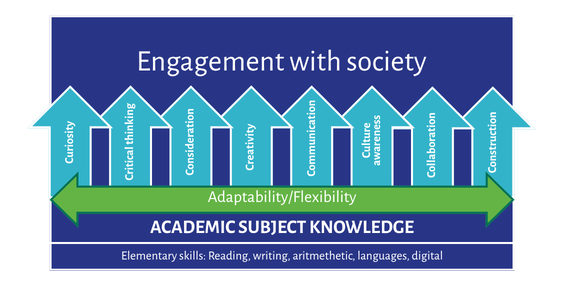
Want to improve your skills and make a difference in society? All of EPICUR’s Entrepreneurship & Employability (E&E) activities are here to help, built on our Common Competence Framework, shown here.
How it works:
- You bring your skills – your basics (reading, writing, languages…) plus your academic knowledge.
- We build around the 8 Cs – every activity is designed around at least one core competence.
- Adaptability comes first – the skill most in demand across EPICUR regions.
- You gain self-awareness – a clearer picture of your own skillset.
- You engage with society – ready for what comes after your studies.
Transforming ideas into real value
Entrepreneurship is no longer just about starting a business. It encompasses methods and a mindset that everyone can benefit from.
“Entrepreneurship is when you act upon opportunities and ideas and transform them into value for others. The value that is created can be financial, cultural, or social”.
Turning ideas into shared value is equally relevant to progressing one’s career, supporting one’s local sports team or establishing a new social enterprise.
DesUni: Redefining university learning through design thinking
A design-driven teaching model for universities.
It empowers students to solve complex problems, fosters creativity, and transforms traditional education through collaborative, student-centered learning.
Key entrepreneurial tools
Turn visions into reality by spotting opportunities, designing innovative solutions, and delivering real value to your target audience.
Explore these two essential toolkits for problem-solving, collaboration, and pitching:

How to work with your Employability & Career:
Employability relates to your ability to develop yourself and your skills continuously to create value at the labour market as a student and later as graduate.
Boost your employability with actionable tips and exercises across three key stages: PREPARE, PLAN and ACT.
PREPARE
Goal: Take stock of your skills and resources to communicate them effectively.
1. Map your competencies
A competency = the ability to apply what you’ve learned in one context to another.
Example: You coordinate group projects at the university → You use this skill to manage tasks in a volunteer role.
Types of competencies:
- Academic: Analytical thinking, critical reflection, systematic work.
- Field-specific: Technical skills from your degree.
- Personal (soft skills): Leadership, teamwork, adaptability.
- Experiential: Internships, part-time jobs, extracurriculars.
Tools:
- The EPICUR alliance created a shared framework to help you identify top skills in demand.
- Exercise:
- Direct approach: Pick a competency from the framework → Find 1 real-life example where you used it.
- Reverse approach: Think of a professional achievement → Identify the competency behind it.
Use these examples in your CV and cover letters!
2. Discover your personality profile
Why? Employers often use personality tests to recruit (Belbin, DISC, Myers-Briggs, Whole Brain…).
Where to take them?
- Your university career center (often free).
- Free online versions.
These tests also reveal your soft skills!
3. Build a standout CV
Golden rules:
1-2 pages max (check local norms).
Clear structure:
- Profile: 2-3 lines introducing you + your aspirations.
- Education: Studies + key skills gained.
- Experience: Roles + concrete achievements
- Other Skills: Languages, software, certifications (divided by category).
Design tips:
- Templates: Canva, Word, Novoresumé.
- Customization:
- Match colors to the company’s branding.
- Photo? Check local expectations (some countries require it; others avoid bias).
- Gross CV: Create a full version with all experiences, then tailor it for each application.
Avoid:
- Irrelevant personal details (age, marital status) if the company prefers neutral applications.
4. Research Opportunities
Ask yourself:
- What type of experience suits me? (Part-time job, internship, volunteering…)
- Which industries/roles align with my profile?
Research methods:
- By opportunity type:
- Internship, graduate job, project collaboration, freelance…
- By sector:
- Tech, healthcare, NGOs… → Identify target companies.
- By organization:
- Check their website (strategy, culture, job openings).
- Job platforms:
- LinkedIn, Indeed, university job portals.
PLAN
A career PLAN helps you set goals, track progress, and adapt. Your network can provide support, guidance, and opportunities.
1. Network mapping
Use LinkedIn to:
- Connect with professionals in your field or industries of interest.
- Research companies, roles, and career paths.
For internships or current roles, identify 5–10 key contacts. Ask:
- What skills or knowledge do you need from them?
- Where are they in the organization?
- How can they assist you?
2. Career planning
Break goals into smaller, actionable steps. For each step, define:
- What’s missing (skills, connections)?
- Who can help?
- What actions will you take?
- When will you do it?
- How will you measure success?
3. SMART goals
Make goals:
- Specific (clear and focused)
- Measurable (track progress)
- Achievable (realistic)
- Relevant (aligned with your career plan)
- Time-bound (set a deadline)
ACT
Start putting your career plan and SMART goals into practice. With your CV ready and a clear overview of your skills, it’s time to ACT.
1. Turn goals into action
Use this exercise to move from planning to action:
- Support: What or who can help you reach your goal (skills, people, resources)?
- Obstacles: What might prevent you from reaching your goal?
- Solutions: What actions can you take to overcome these obstacles?
2. Ways to take action
- Explore collaborations, internships, or projects through your study program, the EPICUR course catalog, or EPICUR Entrepreneurship & Employability activities.
- Test career ideas through case competitions, entrepreneurship programs, volunteering, or student jobs.
- Register for job portals for full-time, part-time, or internship opportunities at your university or partner institutions.
- Activate your network via LinkedIn, career fairs, or alumni events.
- Seek career counseling at your university.
- Start job hunting and refine your CV and applications.
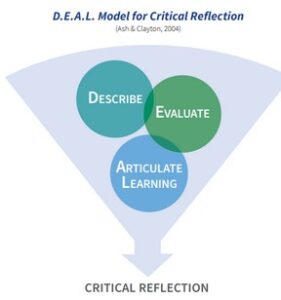
Reflection questions for students: The D.E.A.L. model for critical reflection
Describe:
-
What took place?
-
When and where did the experience in question take place?
-
Who was and was not present?
-
What did you and others do/not do?
-
What did you see, hear, etc.?
Evaluate:
-
In what ways did you succeed or do well?
-
In what ways were you challenged?
-
How did this experience make me feel (positively and/or negatively)?
-
How has your perspective/thoughts changed in light of your experience?
Articulate Learning:
-
What did you learn?
-
How did you learn it?
-
Why does it matter?
-
What will I do in light of it?
Source: Sterling et al 2016, p. 69-7
Entrepreneurship & Career Services across EPICUR
Explore entrepreneurship and career support across the EPICUR alliance, click on a university on the map to find its dedicated resources.

University of Amsterdam, Netherlands
Entrepreneurship: Student Startup Lab
Career Service: UvA Career Centre

University of Strasbourg, France
Entrepreneurship: ETENA
Student entrepreneurship: Strasbourg aim(e) ses étudiants
Career Service: Espace Avenir

Université Haute-Alsace, France
Entrepreneurship: Entrepreneuriat étudiant
Career Service: Orientation et insertion

University of Southern Denmark, Denmark
Entrepreneurship: SDU Startup Station
Career Service: SDU Career

Adam Mickiewicz University, Poland
Entrepreneurship: Biuro Karier AMU (PL) | (EN)
Career Service: Biuro Karier AMU

Karlsruhe Institute of Technology, Germany
Entrepreneurship: KIT Gründerschmiede
Intrapreneurship: MakeIt KIT
Career Service: KIT Career Service



Aristotle University of Thessaloniki, Greece
Entrepreneurship: WALK AUTh
Career Service: Career Office AUTh

Continue to explore !
You can continue to learn more about our Alliance by reading other pages on our website. Here is a selection of pages related to this content!